Invited Speakers
Invited Speakers (Alphabetize by Last Name)
Ahmet Tugrul BayrakAta Technology Platforms, Turkey
Speech Title: Comparing Few-Shot Prompting and Machine Learning Models for Multi-Class Text Classification
Ahmet Tugrul Bayrak is the Data Science Manager at Ata Technology Platforms in Turkey. He holds a Bachelor of Science degree in Mathematical Engineering from Yildiz Technical University and another in Computer Engineering from The Technological University of the Shannon. Additionally, he attended Uppsala University for a Master's degree in Computer Science. With a career rooted in software engineering and data science, Mr. Bayrak has contributed to numerous projects, particularly in Natural Language Processing and Recommender Systems. Alongside his industry work, he remains active in academia, with a substantial portfolio of published research papers.
Abstract: This study compares LLM-based text classification using ChatGPT o4-mini with traditional machine learning models: Logistic Regression, Random Forest, Support Vector Classifier, Neural Networks on a balanced Turkish news dataset, which contains 4900 texts and seven categories. Different sampling strategies are evaluated for LLMs, including random sampling (one-shot, five-shot, ten-shot) and similarity-based sampling with Faiss. The results indicate that LLMs, particularly Faiss-10, achieve the highest macro F1 score, outperforming traditional methods. However, models such as Logistic Regression and Neural Networks remain competitive in scenarios where computational efficiency is prioritised. The findings suggest that the choice of method depends on application requirements, data availability, and computational constraints. Future work will explore additional datasets and LLM architectures.
Dr. Jiwon RHOBusiness Development Lead, LetinAR, South Korea
Speech Title: The Science Behind Immersive Displays: Enabling Technologies for AI Smartglasses
Jiwon RHO is a founding member and Business Development Lead at LetinAR, with over eight years of expertise in the AR industry, specializing in geometric waveguide technology for smartglasses. He has presented on AR optical systems at major industry conferences, including OLEDs World Summit (Smithers), AR/VR Summit (TechBlick), and OLED & XR Korea (UBI Research).
Abstract: Augmented reality smartglasses are emerging as a key interface for AI applications, yet achieving lightweight, affordable, and visually compelling devices remains a significant challenge. This talk explores the science behind immersive AR displays, covering optical architectures, display technologies, sensor integration, and rendering techniques. Plastic reflective waveguides are highlighted as a case study for achieving low weight and cost through precision injection molding.

Kevin Xin
XINVISIONQ, INC., USA
Speech Title: On Scientific Discovery - A decision-machine approach
XINVISIONQ, INC., USA
Speech Title: On Scientific Discovery - A decision-machine approach
Kevin Xin is co-founder of XINVISIONQ, INC., and has published two papers and a book. His research interests include decision-making under uncertainty, time-series forecasting, and machine learning for scientific discovery. He was awarded Excellent Oral Presentation Award at the 3rd International Conference on Artificial Intelligence, Big Data, and Algorithms, and as CEO of XINVISINQ, INC., xINvisionQ has been accepted to two premier international startup programs. He graduated from ALVS Class of 2021 with exemplary student honors; was admitted to UIUC Class of 2025.
Abstract: Artificial Intelligence and Machine Learning have vastly accelerated our pace of scientific discovery but could a machine make scientific discoveries entirely on its own? We boldly aim to develop a machine to not only aid us on our quest of learning more about nature but one that can automatically do so on its own in three distinct parts: (1) Describe nature's "behavior" and the machine's "actions" to understand nature all under a unified formularized symbol framework; (2) In order to get the machine to perform inductive reasoning effectively from observed data we've defined three quantized inductive rules: i. similarity degree, ii. effective operational level, iii. consistency; (3) By applying genetic programming algorithm the machine optimizes the most effective operation matrix that'll be able to reconstruct nature's past "behavior" as well as effectively predict nature's future "behavior" through constant self-adapting and self-learning. In this talk, I will first briefly go over traditional established approaches of scientific discovery and where they've done well as well as their shortcomings. Next I will present how our decision-machine sets out on its scientific discovery path from an information perspective and how it will follow the three defined induction rules. Following I will outline how the decision-machine is constructed specifically by drawing upon the concepts of the first three quantum mechanics axioms as defined in Hilbert Space. Lastly an overview of how the "fittest" hypothesis is evolved from all the generated possible ones which should conform to what happened in the real world.
Invited Speakers in Past CEII
Asst. Prof. Hugo Wai Leung Mak
The Chinese University of Hong Kong
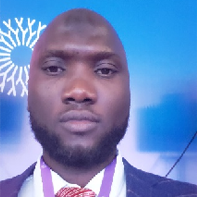
Asst. Prof. Hamza Djigal
Wenzhou Kean University, China
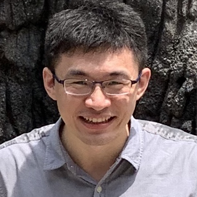
Assoc. Prof. Qiyu Kang
University of Science and Technology of China

Mr. Ahmet Tugrul Bayrak
Ata Technology Platforms

Concordia University
Zhejiang Lab, China